Grand Central Market works best as part of a Downtown day, not as a permanent ranking of stalls.
Begin with the building and block
The market occupies a historic Downtown setting near civic, commercial, and transit layers. Before choosing what to eat, notice entrances, grade changes, neighboring streets, the flow between the market and Hill Street, and the way office workers, residents, visitors, and vendors share the room.

Warner Bros. Studio Tour Hollywood
Our Studio Tour brings you closer than ever to the entertainment you love. You’ll explore one of the busiest working studios in Los Angeles with one...

Best of Los Angeles Guided City Tour with 4 Stops and Free Time
Check out the BEST Los Angeles has to offer on this half-day interactive sightseeing experience! Take a seat on one...

Full-Day Iconic Sights of LA, Hollywood, Beverly Hills, Beaches and More
This 7.5 hour guided tour - by LA-natives - is perfect for families, couples and all ages! Our routes are carefully...

Long Beach Harbor 45-Minute Boat Tour
Join us as we explore Long Beach's coastline. You will learn history about the harbor as well as see the beautiful L...
Do not freeze the tenant list
Vendors, menus, service patterns, and crowds change. Consult the market and individual businesses for current information rather than relying on an old “best of” list. If a particular meal matters, confirm it directly and keep a second option nearby.
Approach the room as a shared working space. Read the ordering instructions, let queues clear doorways, and ask before rearranging seating or making a close photograph. A vendor may be preparing food, managing deliveries, and serving regular customers at the same time; travel content should not make that labor invisible.
Build a compact Downtown sequence
- Pair the market with one nearby architectural interior or civic space, subject to current public access.
- Use rail or a short walk to avoid turning lunch into a parking itinerary.
- Choose one longer cultural stop rather than stacking several brief entrances.
- Leave enough time to notice the street between destinations.
One workable pattern starts with an arrival at Union Station, continues by transit or a measured walk toward the market, and adds one nearby building or cultural institution. Another begins with a Downtown museum or civic appointment and uses the market as the middle pause. Neither pattern depends on a particular vendor being open.
Compare access, not only appetite
Check current entrances, stairs, elevators, seating, restrooms, and crowd conditions when those details matter. The surrounding slopes and crossings can be more demanding than the interior. Travelers with allergies or dietary requirements should speak directly with the vendor about ingredients and preparation; a guide cannot guarantee against cross-contact.
Photograph with context
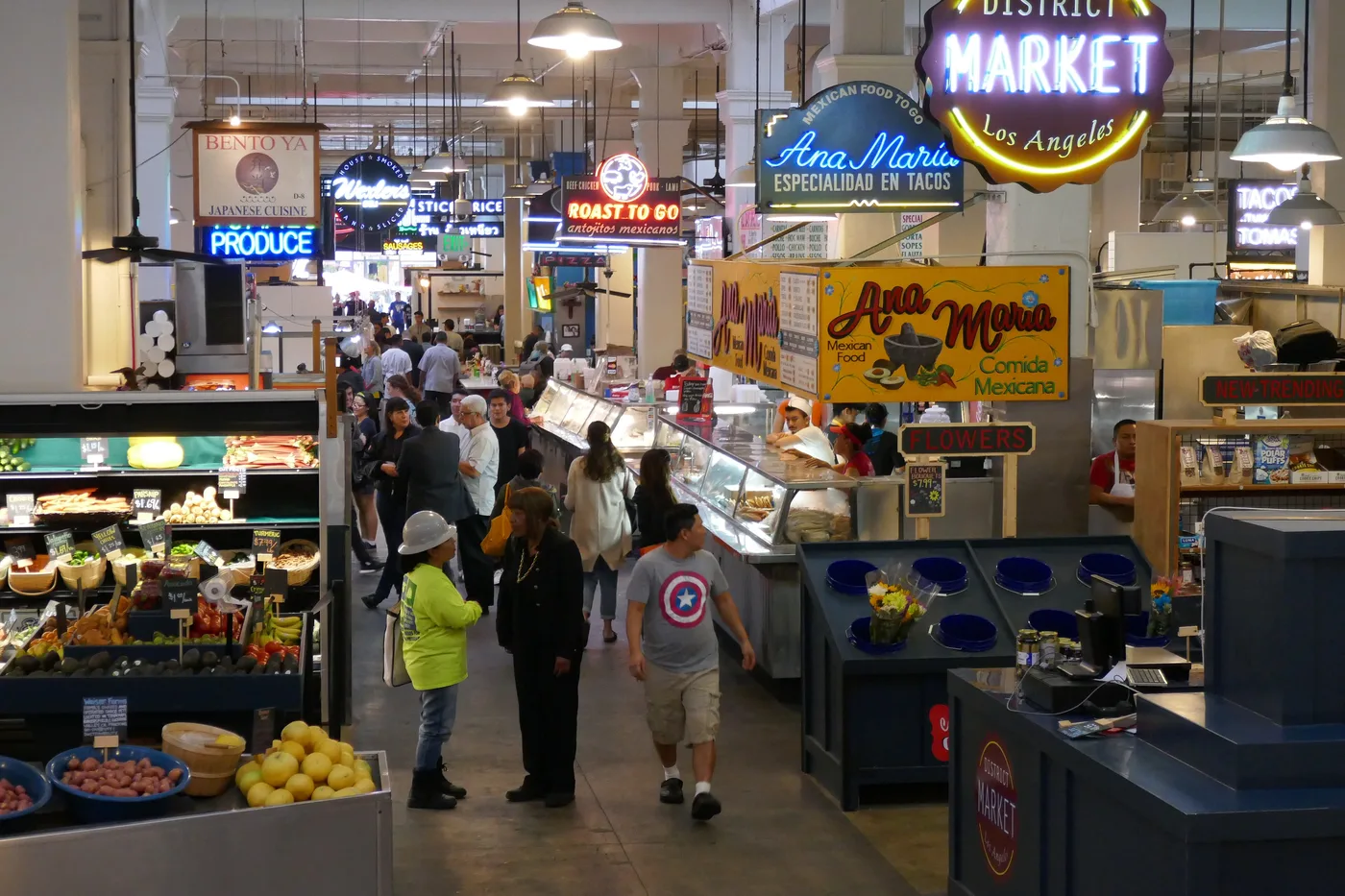
Vendor signs and people at work are not generic color. Keep business names legible when they are the subject, ask before making a close portrait, and avoid blocking service. A useful caption identifies the market and date rather than implying that every visible stall remains unchanged.
Notice material details that belong to the building and its use: changing light at the entrances, tiled or concrete surfaces, overhead signs, aisle widths, and the transition to the street. Those observations create a richer record than a tightly cropped plate with no sense of place.
Continue to the Guides index for neighborhood and architecture context that can shape the rest of the day.